Overview

The Department of Health Policy and Systems Management at the USF College of Public Health is dedicated to advancing the field of public health through research, education, and real-world impact. Our expert faculty bring extensive academic and practical experience in areas such as health economics, health care finance, health services research, health law, leadership, organizational behavior, marketing, systems management, health policy, and occupational safety and health. By integrating these disciplines, we prepare students to navigate complex health systems, shape effective policies, and lead organizations that improve health outcomes for communities, clinicians, and patients alike.
With a focus on both theoretical knowledge and applied skills, our programs equip graduates for success in health policy, administration, and management. Through hands-on learning opportunities, mentorship, and professional networking, students gain the expertise needed to excel in roles across health care organizations, government agencies, and research institutions.
-
Post-Grad Employment
92% of MHA graduates secure employment within 90 days of graduation.
-
Rewarding Career Paths
Alumni hold careers as financial and policy analysts, quality and patient experience managers, and marketing managers.
-
National Impact
Graduates work at top health organizations including the CDC, Moffitt Cancer Center, and Sarasota Memorial Hospital.
Why Choose COPH Health Policy & Systems Management?
- Flexible Learning for Professionals: Our CAHME-accredited Master of Health Administration (MHA) program offers convenient evening courses designed to fit the busy schedules of working professionals.
- Strong Professional Network: Engage with a vibrant professional community through various organizations, including the department-affiliated Healthcare Management Student Association (HMSA), which empowers students to develop leadership skills and connect with local healthcare executives in the Tampa Bay area. There are also opportunities for career mentoring through local chapters of the American College of Healthcare Executives and the American Society of Safety Professionals.
- Tailored Educational Pathways: Choose from a range of programs including an MPH with specialized concentrations, an MHA, and a PhD in Health Services Research, tailored to meet your career aspirations.
- Hands-On Learning Experience: Benefit from experiential learning placements at leading healthcare institutions such as Tampa General Hospital, BayCare Health System, Nemours Children's Hospital, the Poison Control Center, and the James A. Haley Veterans’ Hospital, providing practical exposure to real-world health management challenges.

"USF felt like home, not just because of its proximity but its sense of community. It is a family school to me. My work with the faculty, especially Dr. Katherine Drabiak, and the sense of camaraderie with my peers were defining moments. Today, I have reached my ultimate dream as a Transportation Safety Specialist at the National Transportation Safety Board. I work with state and local agencies to push for improvements in transportation safety that can save lives." - Sophia Peerzada, MPH Alumni

USF team joins national competition to improve health care for colorectal cancer
Students from the University of South Florida’s College of Public Health (COPH) and Taneja College of Pharmacy (TCOP) are developing novel, interdisciplinary approaches in the screening, treatment and survivorship of a cancer that kills more than 55,000 people each year in the United States.
USF team joins national competition to improve health care for colorectal cancer
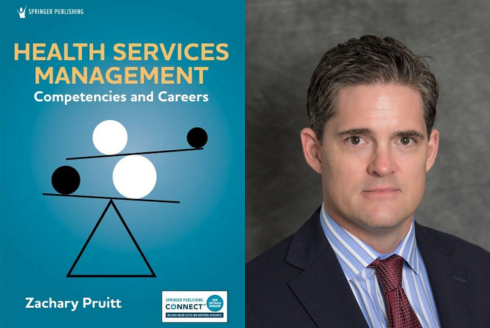
USF professor’s textbook earns national 2025 Book of the Year honor
Dr. Zachary Pruitt, professor and alumnus of the USF College of Public Health, has been named a 2025 Book of the Year Award winner by the American Journal of Nursing (AJN), earning first place in the health care administration category for his textbook, Health Services Management: Competencies and Careers.
USF professor’s textbook earns national 2025 Book of the Year honor

The business of better health
For Will Steed, earning his master of health administration (MHA) from USF’s College of Public Health was the result of years of thoughtful reflection, gradual pivots and a long-standing connection to health care that began well before he ever stepped into a classroom.