
Psychiatry & Behavioral Neurosciences
General Outpatient Services

Many mental health and behavioral conditions can be managed on an outpatient basis. The USF Health Psychiatry Center offers a variety of out-patient services, offering advanced and effective treatments for a range of disorders. Our team of experienced psychiatrists, psychologists, and licensed clinical social workers provides a full spectrum of care for mental health conditions.
Our providers offer specialty care within many clinics across the Tampa Bay area, including:
The USF Health Psychiatry Centerprovides quality, compassionate patient care in an outpatient setting.
The Mary Louise and Archie Silver Child Development Center is dedicated to expanding knowledge about child and adolescent psychiatric disorders, their diagnosis and treatment, as well as promoting prevention and healthy development.
The USF Health Memory Disorders Clinic offers a multidisciplinary and individualized approach to the diagnosis of persons with memory disorders and related conditions.
The USF Health Neurotherapies Clinic provides patients with new techniques in the treatment of certain mental health disorders. Neurotherapy utilizes magnetic field or electrical charge to stimulate areas of the brain to assist with symptom improvement. Transcranial Magnetic Stimulation (TMS) therapy is available to eligible patients for the treatment of medication resistant major depression on a convenient outpatient basis.
At USF Health, we want to make it easy for patients to get the care they need.
-
Please contact us at (813) 974-1404 to learn more about clinical research trials at USF Psychiatry. All study related visits, procedures, and study-medications are provided.
Why is Research so important?
Without medical research, medicine would not have made the advances that we enjoy today. For you and for future patients, research is essential. Volunteering for medical research provides participants with opportunities to contribute to society, to the community and to others who have health problems.
Who can take part in a research study?
Each research study has requirements about who can participate. Using specific requirements is an important principle of research that helps to produce reliable results. These requirements are called inclusion and exclusion criteria. Inclusion criteria explain exactly what kinds of people may participate, while exclusion criteria explain exactly what kinds of people may not participate. These criteria are often based on such factors as age, gender, medical history, current health and past medical treatments. Some research studies seek participants with specific illnesses or conditions, while others need healthy volunteers.
What is informed consent?
Informed consent is the process of learning the key facts about a research study before deciding whether to participate. The consent process continues to provide information to you throughout your time in the study. To help you decide whether or not to participate, the researchers and staff will meet with you to explain the details of the study. You should feel free to ask any questions and to tell them if you don't understand something. The research team then provides an informed consent document that explains details about the study, such as its purpose, its length, required procedures, and key contacts. Known risks and potential benefits are also explained. You may also take a 'read only' copy of the informed consent document home with you to review and consider.
If you decide to participate, you must sign the informed consent document. You will be given a copy of the document to keep. Informed consent is not a contract; by signing it you do not give up any of your rights and you can quit at any time. If you decide to quit, you should tell the research team.
How can I prepare for the first meeting with the researchers?
- Bring a friend or relative along for support and to hear the responses to your questions.
- Bring pen and paper to take notes.
- You can ask questions or stop the discussion if you don't understand what is being said.
- Make a list of questions to ask.

Moms open up about dealing with postpartum depression and psychosis
USF Health's expert Dr. Deborah Knudson Gonzalez, specialist in reproductive psychiatry appears on ABC's Nightline. Dr. Gonzalez shares her expertise on postpartum depression and psychosis.
Moms open up about dealing with postpartum depression and psychosis
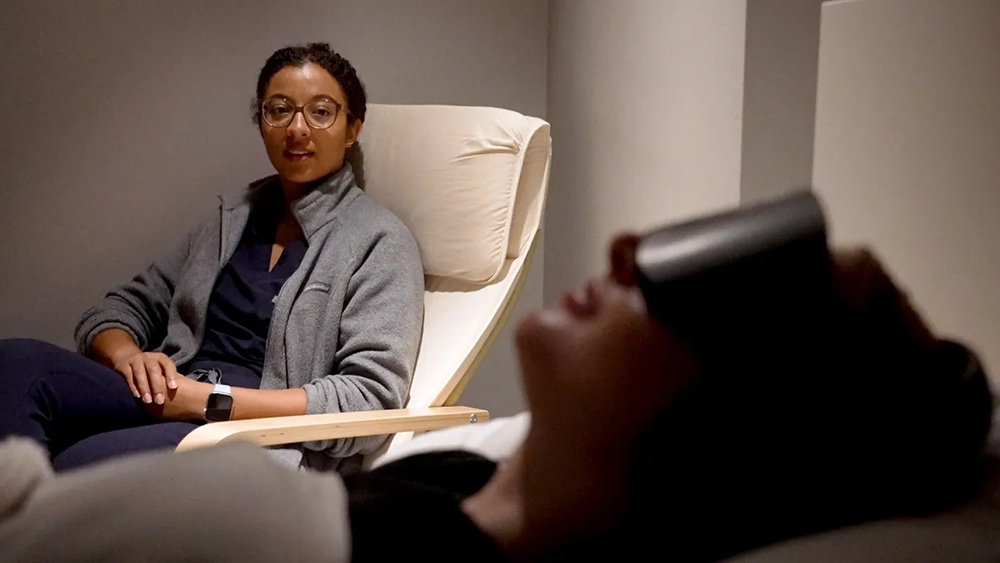
USF Health Explores Psychedelics for Treatment-Resistant Depression
USF Health psychiatrists Dr. Ryan Wagoner and Dr. Deborah Knudson Gonzalez discuss their psilocybin and psychedelic compounds research for major depressive disorders, including treatment-resistant and postpartum depression. Watch and see if you qualify for ongoing trials.