Center for Families Impacted by Substance Use
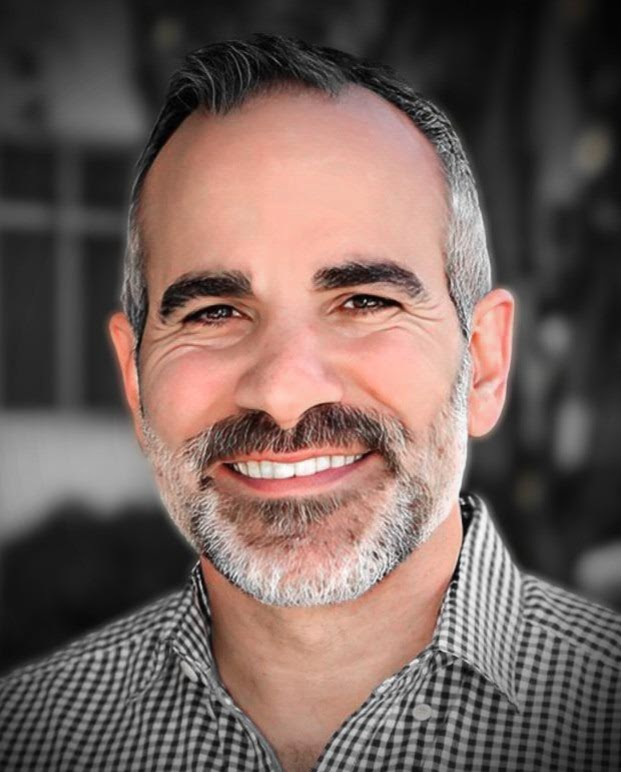
Jason L. Salemi, PhD, MPH, FACE
Professor, Department of Epidemiology
Chair, Department of Epidemiology
Concentration Lead, PhD Program, Epidemiology
Contact Info
-
13201 Bruce B. Downs Blvd.
MDC56
Tampa FL - Academic Email: jsalemi@usf.edu
- Academic Phone: (813) 974-9449
- View My C.V. | View My Website | View My Lab Site
Education
- PhD, Public Health (Epidemiology), University of South Florida, 2014
- Graduate Certificate, Applied Biostatistics, University of South Florida, 2008
- MPH, Public Health (Epidemiology), University of South Florida, 2005
- Graduate Certificate, Biostatistics, University of South Florida, 2004
- BS, Biology, University of South Florida, 2000
Biography
Dr. Jason L. Salemi is Professor and Chair of the Department of Epidemiology at the University of South Florida College of Public Health. A Tampa native and proud three-time USF alumnus, he earned his BS in Biology, MPH and PhD in Epidemiology, and graduate certificates in Biostatistics and Applied Biostatistics at USF. His career has been shaped by a love of data, an interest in solving difficult problems, and a desire to do work that matters. Before returning to USF in 2020, he spent six years on the faculty at Baylor College of Medicine, where he held leadership roles in research analytics, clinical research training, and a federally funded postdoctoral research fellowship. He was named the inaugural Interim Chair of Epidemiology in 2025 and appointed Chair in 2026. Teaching and mentoring remain among his favorite parts of academic life, particularly helping students move from being intimidated by quantitative methods and programming to confidently using those tools to answer important questions. A husband and father and lifelong Tampa Bay sports fan, he feels fortunate to have built a career that allows him to teach, ask interesting questions, work with people he respects, and contribute to the health of the community he has always called home.
Interdisciplinary and Emerging Signature Programs
- Women & Children's Health
Research Interests
- BIRTH DEFECTS SURVEILLANCE, RESEARCH, AND SYSTEMS OF CARE: Dr. Salemi serves as Principal Investigator of USF's Birth Defects Surveillance Program, a longstanding collaboration with the Florida Department of Health and Centers for Disease Control and Prevention supported by approximately $1 million annually. The program integrates statewide birth defects surveillance with epidemiologic research, data modernization, and evaluation of systems of care for children and families affected by birth defects and neonatal opioid withdrawal syndrome. This work provides a platform for translating surveillance data into research, prevention, program evaluation, and improvements in public health practice.
- MATERNAL AND CHILD HEALTH AND EMERGING THREATS: Maternal and child health is Dr. Salemi's primary substantive research home, with particular interests in birth defects, pregnancy outcomes, maternal morbidity, infant health and mortality, neonatal opioid withdrawal syndrome, and the health of women of reproductive age. He is especially interested in emerging and re-emerging threats to mothers and babies, where rapidly changing conditions require timely detection, adaptable surveillance, rigorous epidemiologic investigation, and translation of population-level data into actionable public health information.
- PUBLIC HEALTH SURVEILLANCE AND DATA MODERNIZATION: A longstanding focus of Dr. Salemi's work is strengthening and modernizing public health surveillance systems. His interests include electronic data exchange, integration of emerging data sources, automation of surveillance processes, development and validation of case-finding approaches, data quality, and the tradeoffs among timeliness, completeness, and accuracy. He is particularly interested in building surveillance infrastructure that can adapt as technologies, data sources, and public health threats evolve.
- RECORD LINKAGE AND INTEGRATED POPULATION HEALTH DATA SYSTEMS: Much of Dr. Salemi's research involves connecting information across otherwise disconnected systems to create richer longitudinal and population-based data resources. His work includes deterministic and probabilistic record linkage, evaluation of linkage quality, and integration of vital records with administrative, clinical, surveillance, and other health data. He develops linked maternal-infant and other longitudinal data systems to answer questions that no individual data source can adequately address and to create reusable infrastructure for research and public health practice.
- EPIDEMIOLOGIC METHODS AND CAUSAL INFERENCE: Dr. Salemi is drawn to difficult methodological problems involving complex, imperfect, real-world data. His interests include epidemiologic study design, causal inference, longitudinal and multilevel methods, quasi-experimental designs, interrupted time-series analysis, measurement and misclassification, missing data, selection bias, and methods for strengthening causal interpretation of observational evidence. Across this work, he emphasizes aligning the scientific question with the study design, assumptions, analytic methods, and interpretation, and being explicit about what available data can and cannot tell us.
- DATA SCIENCE, PROGRAMMING, AND REPRODUCIBLE RESEARCH: Dr. Salemi works at the intersection of epidemiology, data science, and modern computing, developing reproducible approaches for managing, linking, analyzing, and visualizing large and complex health datasets. His interests include R, Python, automation, predictive modeling, reproducible analytic workflows, and emerging computational tools that can make epidemiologic research and public health surveillance more efficient, transparent, scalable, and reproducible without sacrificing methodological rigor.
- TEACHING, DOCTORAL EDUCATION, AND MENTORSHIP: Dr. Salemi serves as Concentration Lead for USF's PhD Program in Epidemiology and teaches across the epidemiologic methods and data-science curriculum, including Epidemiology Methods, Advanced Research Methods in Epidemiology, Data Management in R for Public Health Researchers, and Multilevel Data Analysis. His teaching spans epidemiologic methods, causal inference, data management, statistical programming, and quantitative methods, with an emphasis on understanding why methods work rather than memorizing procedures. He is equally committed to mentorship and to helping students and early-career scientists develop confidence, independence, and scientific identities of their own. His contributions to mentorship were recognized with the American College of Epidemiology's 2025 Outstanding Mentorship Award.
- NATIONAL LEADERSHIP, SERVICE, AND RECOGNITION: Dr. Salemi is a Fellow and member of the Board of Directors of the American College of Epidemiology and a current Board member and Past President of the National Birth Defects Prevention Network. His national service has included leadership in surveillance guidelines and standards, scientific review, editorial service, and development of national approaches to birth defects surveillance and data quality. With more than 225 peer-reviewed publications, his contributions to research, teaching, mentorship, and service have been recognized with USF's Outstanding Research Achievement Award and Excellence in Teaching Award, the American College of Epidemiology's Outstanding Mentorship Award, and the National Birth Defects Prevention Network's President's Award.
- PHILOSOPHY: Dr. Salemi believes epidemiology is at its best when strong methods are paired with important questions. Whether conducting research, teaching, mentoring, or building surveillance systems, his guiding principles are straightforward: understand the problem, respect the data and their limitations, communicate evidence clearly, do work that matters, treat people well, and help the people around you succeed.
- PUBLICATIONS: To explore Dr. Salemi's publications, visit his public "My Bibliography" page on PubMed: https://www.ncbi.nlm.nih.gov/myncbi/jason.salemi.1/bibliography/public/
Recent Publications
- Salemi JL, Tanner JP, Kennedy S, Block S, Bailey M, Correia JA, Watkins SM, Kirby RS. A comparison of two surveillance strategies for selected birth defects in Florida. Public health reports (Washington, D.C. : 1974). 127(4) : 391-400.
- Salemi JL, Comins MM, Chandler K, Mogos MF, Salihu HM. A practical approach for calculating reliable cost estimates from observational data: application to cost analyses in maternal and child health. Applied health economics and health policy. 11(4) : 343-57, 2013.
- Salinas-Miranda AA, Nash MC, Salemi JL, Mbah AK, Salihu HM. Cutting-edge technology for public health workforce training in comparative effectiveness research. Health informatics journal. 19(2) : 101-15, 2013.
- Salemi JL, Tanner JP, Bailey M, Mbah AK, Salihu HM. Creation and Evaluation of a Multi-layered Maternal and Child Health Database for Comparative Effectiveness Research. Journal of registry management. 40(1) : 14-28, 2013.
- Salihu HM, August EM, Salemi JL, Weldeselasse H, Sarro YS, Alio AP. The association between female genital mutilation and intimate partner violence. BJOG : an international journal of obstetrics and gynaecology. 119(13) : 1597-605, 2012.
- Salihu HM, Connell L, Salemi JL, August EM, Weldeselasse HE, Alio AP. Prevalence and temporal trends of hepatitis B, hepatitis C, and HIV/AIDS co-infection during pregnancy across the decade, 1998-2007. Journal of women''s health (2002). 21(1) : 66-72, 2012.
- Nembhard WN, Salemi JL, Ethen MK, Fixler DE, Dimaggio A, Canfield MA. Racial/Ethnic disparities in risk of early childhood mortality among children with congenital heart defects. Pediatrics. 127(5) : e1128-38, 2011.
- Salemi JL, Tanner JP, Block S, Bailey M, Correia JA, Watkins SM, Kirby RS. The relative contribution of data sources to a birth defects registry utilizing passive multisource ascertainment methods: does a smaller birth defects case ascertainment net lead to overall or disproportionate loss? Journal of registry management. 38(1) : 30-8, 2011.
- Connell LE, Salihu HM, Salemi JL, August EM, Weldeselasse H, Mbah AK. Maternal hepatitis B and hepatitis C carrier status and perinatal outcomes. Liver international : official journal of the International Association for the Study of the Liver. 31(8) : 1163-70, 2011.
- Tanner JP, Salemi JL, Hauser KW, Correia JA, Watkins SM, Kirby RS. Birth defects surveillance in Florida: infant death certificates as a case ascertainment source. Birth defects research. Part A, Clinical and molecular teratology. 88(12) : 1017-22, 2010.
- Gilboa SM, Salemi JL, Nembhard WN, Fixler DE, Correa A. Mortality resulting from congenital heart disease among children and adults in the United States, 1999 to 2006. Circulation. 122(22) : 2254-63, 2010.
- Salemi JL, Hauser KW, Tanner JP, Sampat D, Correia JA, Watkins SM, Kirby RS. Developing a database management system to support birth defects surveillance in Florida. Journal of registry management. 37(1) : 10-5; quiz 38-9, 2010.
- Nembhard WN, Salemi JL, Wang T, Loscalzo ML, Hauser KW. Is the prevalence of specific types of congenital heart defects different for non-Hispanic white, non-Hispanic black and Hispanic infants? Maternal and child health journal. 14(2) : 184-93, 2010.
- Nembhard WN, Wang T, Loscalzo ML, Salemi JL. Variation in the prevalence of congenital heart defects by maternal race/ethnicity and infant sex. The Journal of pediatrics. 156(2) : 259-64, 2010.
- Fixler DE, Nembhard WN, Salemi JL, Ethen MK, Canfield MA. Mortality in first 5 years in infants with functional single ventricle born in Texas, 1996 to 2003. Circulation. 121(5) : 644-50, 2010.
- Siegel EM, Salemi JL, Craft NE, Villa LL, Ferenczy AS, Franco EL, Giuliano AR. No association between endogenous retinoic acid and human papillomavirus clearance or incident cervical lesions in Brazilian women. Cancer prevention research (Philadelphia, Pa.). 3(8) : 1007-14, 2010.
- Siegel EM, Salemi JL, Villa LL, Ferenczy A, Franco EL, Giuliano AR. Dietary consumption of antioxidant nutrients and risk of incident cervical intraepithelial neoplasia. Gynecologic oncology. 118(3) : 289-94, 2010.
- Nembhard WN, Salemi JL, Ethen MK, Fixler DE, Canfield MA. Mortality among infants with birth defects: Joint effects of size at birth, gestational age, and maternal race/ethnicity. Birth defects research. Part A, Clinical and molecular teratology. 88(9) : 728-36, 2010.
- Nembhard WN, Salemi JL, Loscalzo ML, Wang T, Hauser KW. Are black and Hispanic infants with specific congenital heart defects at increased risk of preterm birth? Pediatric cardiology. 30(6) : 800-9, 2009.
- Salemi JL, Pierre M, Tanner JP, Kornosky JL, Hauser KW, Kirby RS, Carver JD. Maternal nativity as a risk factor for gastroschisis: a population-based study. Birth defects research. Part A, Clinical and molecular teratology. 85(11) : 890-6, 2009.
- Nielson CM, Schiaffino MK, Dunne EF, Salemi JL, Giuliano AR. Associations between male anogenital human papillomavirus infection and circumcision by anatomic site sampled and lifetime number of female sex partners. The Journal of infectious diseases. 199(1) : 7-13, 2009.
- Nembhard WN, Salemi JL, Hauser KW, Kornosky JL. Are there ethnic disparities in risk of preterm birth among infants born with congenital heart defects? Birth defects research. Part A, Clinical and molecular teratology. 79(11) : 754-64, 2007.
- Zesiewicz TA, Ward CL, Hauser RA, Salemi JL, Siraj S, Wilson MC, Sullivan KL. A pilot, double-blind, placebo-controlled trial of pregabalin (Lyrica) in the treatment of essential tremor. Movement disorders : official journal of the Movement Disorder Society. 22(11) : 1660-3, 2007.