Obstetric Hemorrhage Initiative 2.0 Toolbox

Welcome to the OHI 2.0 Toolbox — your go-to source for all things OHI 2.0. Be sure to check back regularly for the latest updates and resources!
-
FPQC OHI 2.0 Key Resources
- OHI 2.0 Toolkit Document
- OHI 2.0 Key Driver Diagram
- OHI 2.0 Quick Start Guide
- 30-60-90 Day Plan Template
- 30-60-90 Day Plan Example
FPQC OHI 2.0 Data Resources
-
Newest resources since June 2026
Resources from Mid-Initiative Meeting
Driver 3: Response
FPQC Post Birth Health Check Patient Guidelines – This patient education tool reinforces the importance of a follow up visit
Obstetrical Transfer Resources
EMERGENCY INTRAOP MANAGEMENT OF UNDIAGNOSED ACCRETA – Clinical guidelines for intraoperative management of unplanned placenta accreta
-
General Resources
ACOG Committee Opinion 590: Preparing for Clinical Emergencies in Obstetrics and Gynecology
AWHONN Practice Brief Number 13: Quantification of Blood Loss
Strategies for Improving Postpartum Hemorrhage Outcomes (American Heart Association and EPIC)
1a: Develop standardized, facility-wide, stage-based OB hemorrhage emergency management plans
Evidence/Rationale
ACOG Committee Opinion 664: Refusal of Medically Recommended Treatment During Pregnancy
Kawakita et al. 2019 Evaluation of Risk Assessment Tools for Severe Postpartum Hemorrhage in Women Undergoing Cesarean Delivery
Toolkit Resources
AWHONN Risk Assessment Tool – You must provide your name and email address to download these free resources
Revised ACOG Obstetric Hemorrhage Checklist – coming soon
FPQC Post-Birth Bleeding Patient-Facing Flyer – This flyer can be used to help educate patients with hemorrhage risk factors on what to expect if they experience bleeding during or after birth. Spanish version.
ACOG Declination of Blood Products – Guidance document
SMFM OB Emergency Transfer Checklist – Maternal transport briefing form and checklist to assist hospitals with emergency transfers
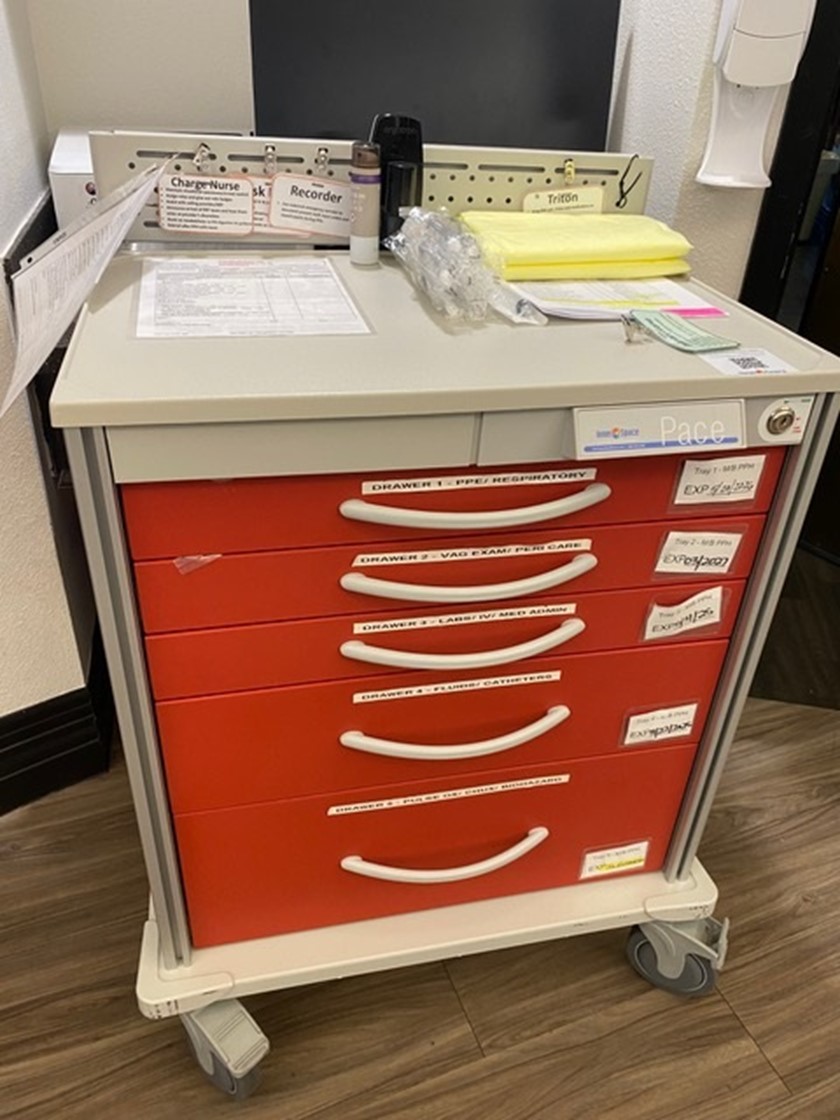
Hemorrhage Cart Example – Winnie Palmer Hospital
OB Emergency Transfer Resources – coming soon
Additional Resources
AWHONN POST-BIRTH Warning Signs Education Program – Structured education program for clinicians with cost involved
CMQCC Appendix C Obstetric Hemorrhage Care Guidelines Table – Staging algorithm table format
CMQCC Appendix B Obstetric Hemorrhage Care Guidelines Checklist – Staging algorithm checklist format
CMQCC Appendix U Sample Code Crimson Postpartum Hemorrhage Management – OB Emergency Code Guideline Example
ACOG Identifying and Managing Obstetric Emergencies in Nonobstetric Settings
1b: Ensure rapid access to medications and maintain readily available hemorrhage cart or equivalent
Evidence/Rationale
Kogutt et al. 2022 Development of an Obstetric Hemorrhage Response Intervention: The Postpartum Hemorrhage Cart and Medication Kit
Shields et al. 2025 Effectiveness of the Intrauterine Balloon Tamponade Compared With an Intrauterine, Vacuum-Induced, Hemorrhage-Control Device for Postpartum Hemorrhage
Overton et al. 2024 Intrauterine Devices in the Management of Postpartum Hemorrhage
Toolkit Resources
Additional Resources
Emergency Cart Examples
BUMED Obstetric Hemorrhage Cart Example – Used by military hospitals
Revised ACOG PPH Recommended Instruments Checklist – coming soon
1c: Conduct interprofessional, interdepartmental team-based training and drills to prepare for recognition and treatment of OB hemorrhage
Evidence/Rationale
TJC HR 11.03.01 EP 2 and 4: Applicable staff are trained annually on the protocols and provisions implemented for emergency services readiness and the hospital is able to demonstrate staff knowledge on the topics implemented.
Toolkit Resources
AIM Patient Safety Learning Modules – Free contact hour for RNs and MDs
Additional Resources
CMQCC Appendix G OB Hemorrhage Simulations and Drills Sample Scenarios
CMQCC Appendix F Guidelines for OB Hemorrhage Simulation Scenario Development – Overview on how to create a Simulation Scenario
CMQCC Appendix AA Sample Script Provider & Patient PPH Post-Event Debrief
1d: Implement a process for timely access to supplies, equipment and procedures for QBL documentation and communication at every birth
Evidence/Rationale
ACOG Committee Opinion 794: Quantitative Blood Loss in Obstetric Hemorrhage
Al Kadri et al. 2011 Visual estimation versus gravimetric measurement of postpartum blood loss: a prospective cohort study
Toledo et al. 2007 The accuracy of blood loss estimation after simulated vaginal delivery
Toolkit Resources
AWHONN QBL Process Map – Scroll towards the bottom of the page to download pdf
Additional Resources
-
General Resources
- The Joint Commission R3 Report: Provision of Care, Treatment, and Services standards for maternal safety PC.06.01.01 Reduce the likelihood of harm related to maternal hemorrhage
- ACOG Practice Bulletin Number 183: Postpartum Hemorrhage
2a: Assess hemorrhage risk on admission to L&D, Pre-Birth and on admission to postpartum and prepare based on risk level
Evidence/Rationale
- ACOG Practice Bulletin Number 233: Anemia in Pregnancy
- ACOG Practice Bulletin Number 9: Levels of Maternal Care
Toolkit Resources
- AIM Patient Safety Bundle Learning Module on Obstetric Hemorrhage – Free online module with CME/CE credits available through ACOG, Nursegrid Learn, or HealthStream
Additional Resources
- AWHONN Risk Assessment Tool & Postpartum Hemorrhage Stages Algorithm – You must provide your name and email address to download these free resources
- CMQCC Appendix C: Obstetric Hemorrhage Care Guidelines
- CDC Recommendations to Prevent and Control Iron Deficiency
2b: Measure blood loss with quantitative and cumulative techniques
Evidence/Rationale
- AWHONN Practice Brief Number 13: Quantification of Blood Loss
- ACOG Committee Opinion Number 794: Quantitative Blood Loss in Obstetric Hemorrhage
- Al Kadri et al. 2011 Visual estimation versus gravimetric measurement of postpartum blood loss: a prospective cohort study
Toolkit Resources
- See Readiness section 1d for QBL tools
- AWHONN QBL Process Map – Scroll towards the bottom of the page to download pdf
- AWHONN QBL YouTube Video
- CMQCC Appendix M: Sample QBL Worksheet
Additional Resources
- Example of dry weights from Readiness (1d)
2c: Manage 3rd stage of labor
Evidence/Rationale
- AWHONN Practice Brief Number 12: Guidelines for Active Management of the Third Stage of Labor using Oxytocin
- Begley et al. 2019 Active versus expectant management for women in the third stage of labour, a Cochrane Review
2d: Provide verbal and written education to all patients on OB hemorrhage risk factors, early warning signs, postpartum complications risk, with added counseling for patients at higher OB hemorrhage risk
Evidence/Rationale
- Eaton et al. 2024 Qualitative Analysis of Women's Experiences of Education About POST-BIRTH Warning Signs
Toolkit Resources
Additional Resources
-
General Resources
Morton et al. 2020 National Partnership for Maternal Safety: Consensus Bundle on Support After a Severe Maternal Event
3a: Utilize a standardized, facility wide, stage-based, obstetric hemorrhage emergency management plan, with checklists and escalation policies for stage-based management of patients with obstetric hemorrhage
Evidence/Rationale
TJC LD 13.01.01 EP 20-22: The hospital has adequate provisionsand protocols consistent with nationally recognized and evidence-based guidelines to meet the emergency needs of patients.
ACOG Webinar on Placenta Accreta Spectrum Disorder Clinical and Designation Guidelines
Overton et al. 2024 Intrauterine devices in the management of postpartum hemorrhage
Toolkit Resources
Additional Resources
LOMC Transfer Protocols – coming soon
Example Policy for Tamponade Balloon or Vacuum Device – Winnie Palmer Hospital
Rapid Response Team Policy Examples – Winnie Palmer Hospital
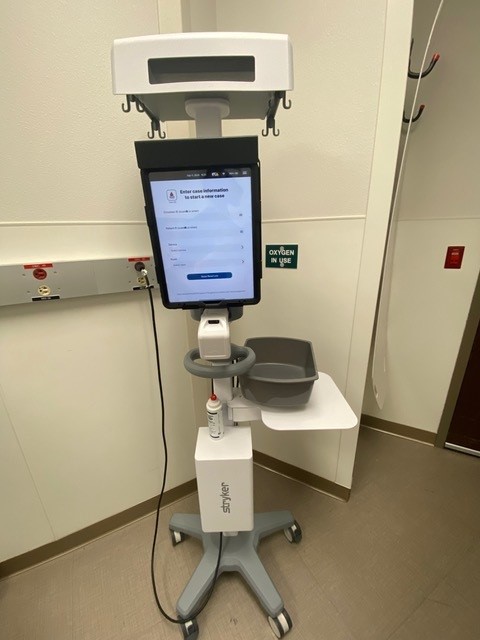
Triton QBL Calculator Examples – Winnie Palmer Hospital
JADA System - The JADA® System is intended to provide control and treatment of abnormal postpartum uterine bleeding or hemorrhage when conservative management is warranted
AWHONN QBL Process Map – Scroll towards the bottom of the page to download pdf. You must provide your name and email address to download these free resources
H Magnet from South Miami Hospital: Placed outside the door to alert others that the patient is at high risk for hemorrhage
For hemorrhage carts see 1b
3b: Clinical Team Debrief and Huddles
Toolkit Resources
Additional Resources
See below for patient brief resources (3c)
3c: Provide trauma-informed support for patients, identified support network, and staff for all obstetric hemorrhages, including discussions regarding birth events, follow-up care, resources, and appointments
Evidence/Rationale
Morton et al. 2024 National Partnership for Maternal Safety: Consensus Bundle on support after a severe maternal event
Vedam et al. 2017a The mothers on respect (MOR) index: measuring quality, safety, and human rights in childbirth
Vedam et al. 2017b The Mother’s Autonomy in Decision Making (MADM) scale: Patient-led development and psychometric testing of a new instrument to evaluate experience of maternity care
Toolkit Resources
AHRQ SHARE Approach – 5-step communication model for shared decision-making
Additional Resources:
CMQCC Appendix I Discharge Planning During the Birth Hospital Stay
FPQC Patient Brief Tools on Obstetric Hemorrhage
FPQC Post-Birth Bleeding Patient-Facing Flyer – This flyer can be used to help educate patients with hemorrhage risk factors on what to expect if they experience bleeding during or after birth. Spanish version.
FPQC MFC Webpage – Refer here for a full list of Respectful Care resources
FPQC PACC Patient-Facing Copy of the Post-Birth Health Check – Symptoms to look out for and postpartum support help lines
FPQC Post Birth Health Check Patient Guidelines – This patient education tool reinforces the importance of a follow up visit
PQCNC Life After Postpartum Hemorrhage - Resource for patients to learn what to expect during recovery after a hemorrhage and identify topics they would like more information on
Partnering in healthcare: A framework for better care and outcomes – Safer Care Victoria Canadian toolkit to help hospital teams engage patients
Postpartum Support International (PSI) Webpage for Professionals
PSI Birth Trauma Support – Virtual support group for patients
Patient Family Advisory Committee
-
Evidence/Rationale
ACOG Committee Opinion 667: Summary from one of our OHI 2.0 Clinical Leads, Dr Hux
"This ACOG Committee Opinion offers a framework for obstetric triage and transfer for facilities providing obstetric care. It provides an overview of decision-making in obstetric transfer, legal requirements of EMTALA, and development of obstetric triage protocols and algorithms. This document urges hospital-based obstetric units to collaborate with emergency departments and response systems and shares AWHONN’s Maternal-Fetal Triage Index as an example of a validated algorithm for obstetric triage. In OHI 2.0, hospitals can benefit from using this opinion in shaping their own protocols for triage of patients at high risk for obstetric hemorrhage and in transfer of patients to facilities that can provide a higher level of maternal care when necessary."
PC 14.01.01 EP 15: The hospital has written policies and procedures for transferring patients to the appropriate level of care as needed to meet the needs of the patient. The hospital also provides annual training to relevant staff regarding the hospital policies and procedures for transferring patients.
Examples of Hospital Transfer Policies
Orlando Health (OH) Transfer Process Examples:
Accreta Management
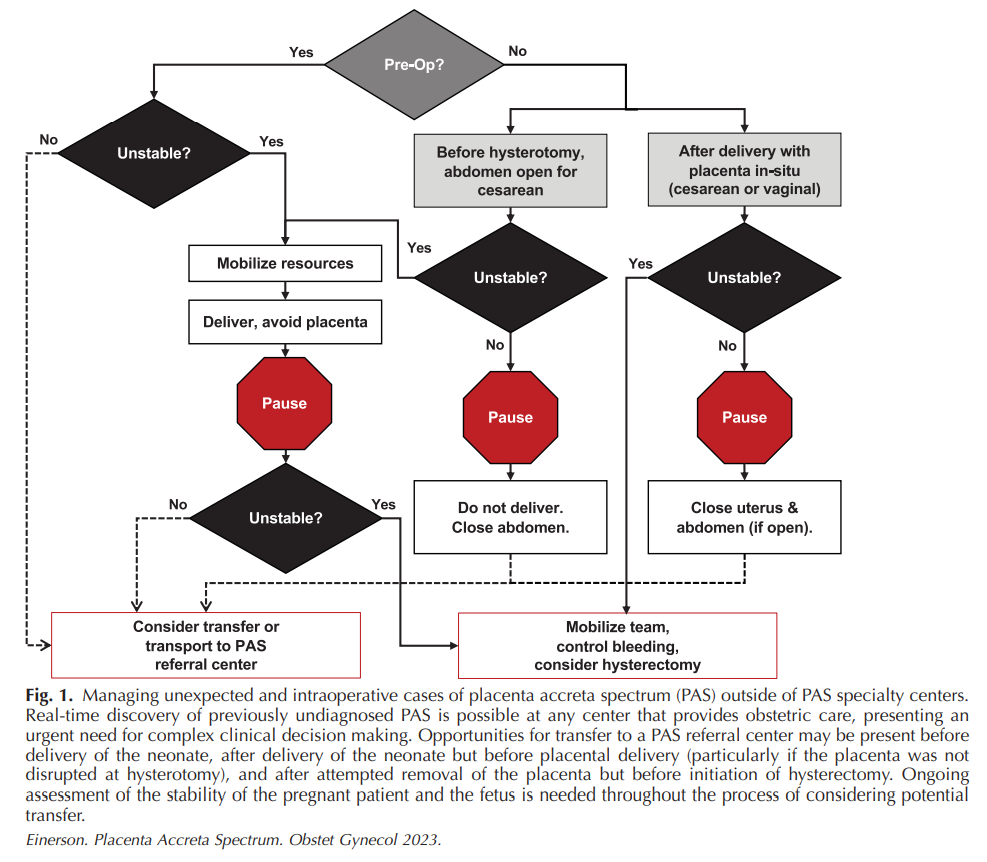
OB Emergency Algorithm: Managing unexpected and intraoperative cases of placenta accreta spectrum (PAS) outside of PAS specialty centers from Placenta Accreta Spectrum (Einerson et al. 2023).
EMERGENCY INTRAOP MANAGEMENT OF UNDIAGNOSED ACCRETA: Clinical guidelines for intraoperative management of unplanned placenta accreta
Evidence-Based Perioperative Management of Placenta Accreta Spectrum Disorder (Gilner et al. 2025)
Leaving Placenta In Situ for Management of Placenta Accreta Spectrum Disorder (Amro et al. 2025)
Management of unexpected placenta accreta spectrum cases in resource-poor settings (Rozi et al. 2023)
Antenatal Planning Worksheet (Interdisciplinary Team): Intended for use by PAS referral centers to guide the discussion at interdisciplinary team meetings
Abdominopelvic Packing
Emergency Intraop Management of Undiagnosed Accreta - coming soon