Functional Neurosurgery
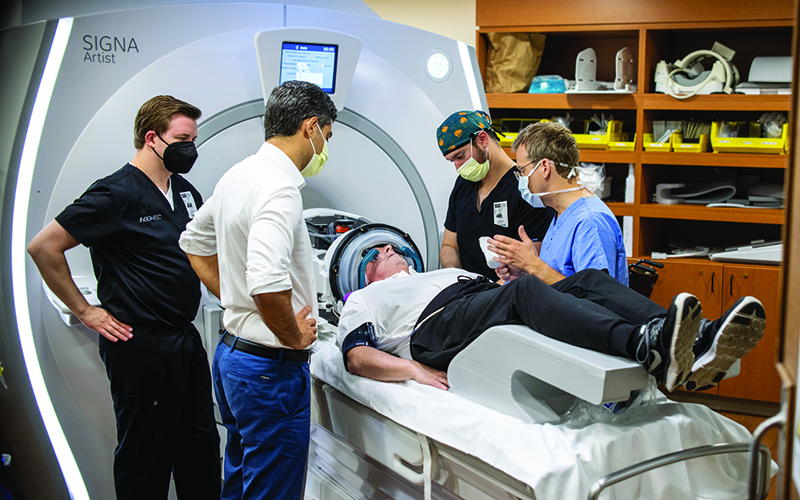
The Division of Functional Neurosurgery within the USF Health Department of Neurosurgery, Brain and Spine is dedicated to improving the lives of patients with complex neurological disorders through advanced surgical care, innovative research, and multidisciplinary collaboration. As part of an academic health system, the division unites clinical expertise with scientific discovery to build individualized treatment strategies that restore function, relieve symptoms, and enhance quality of life.
Comprehensive, Patient-Centered Care
The Multidisciplinary Approach
Every patient's journey is different, and effective treatment begins with understanding the person behind the diagnosis. Our multidisciplinary team, spanning neurosurgery, neurology, neuropsychology, pain medicine, physical medicine and rehabilitation, neuroradiology, and allied health services, works together to build treatment plans centered on each patient's goals, lifestyle, and long-term well-being.
From initial consultation through long-term follow-up, patients receive coordinated care built on collaboration, shared decision-making, and continuity at every stage.
Treatments and Disorders
The division treats a wide spectrum of neurological disorders, including:
Movement disorders such as Parkinson's disease, essential tremor, and dystonia
Epilepsy
Chronic pain syndromes
Spasticity
Peripheral nerve disorders and injuries
Other conditions requiring advanced functional neurosurgical intervention
Advanced Surgical Innovation
Functional neurosurgery is among the fastest-evolving fields in neurological surgery, combining sophisticated imaging, precision-guided technology, and neuromodulation to treat disorders once considered difficult, or impossible, to manage surgically.
As new technologies continue to reshape the field, the division remains committed to evaluating and adopting innovations that improve patient outcomes and expand treatment options.
Stereotactic Radiosurgery
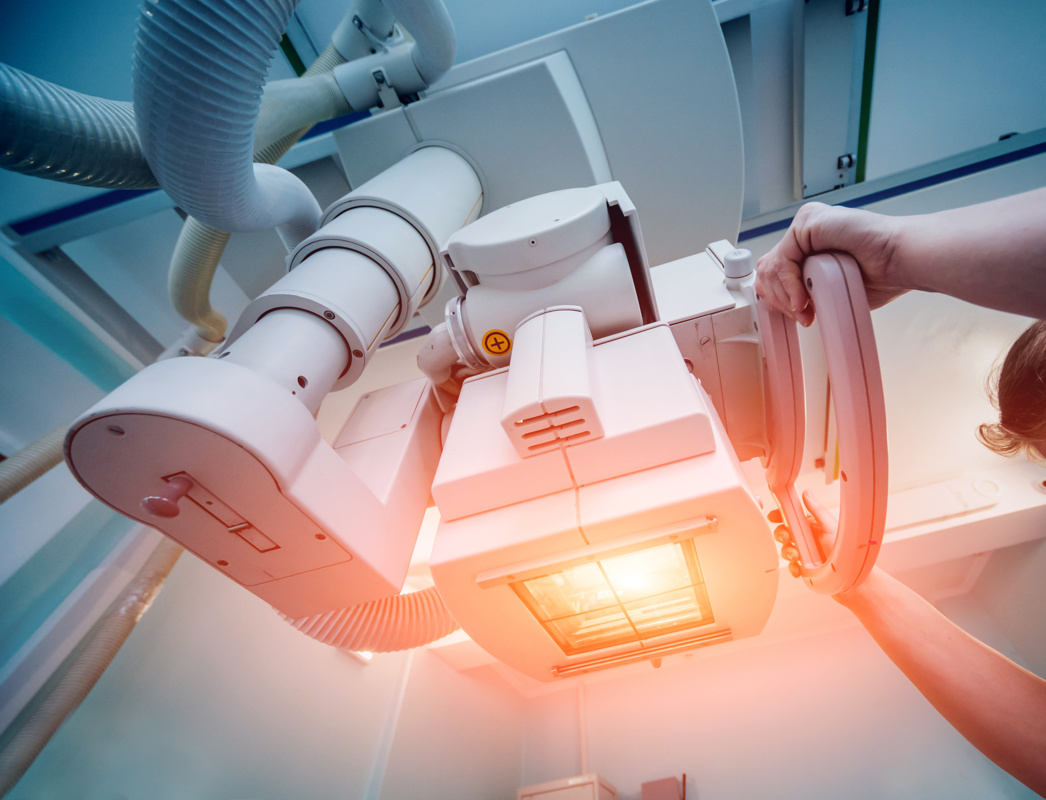
Stereotactic radiosurgery (SRS) is a noninvasive treatment that delivers highly focused radiation with submillimeter precision to target abnormal brain tissue while minimizing exposure to surrounding healthy structures. Using advanced imaging and computer-assisted treatment planning, SRS achieves results comparable to surgical resection without an incision. It is commonly used to treat brain tumors, vascular malformations, and select functional disorders, including movement disorders, chronic pain syndromes, and epilepsy. Because the procedure typically does not require general anesthesia, most patients are treated on an outpatient basis with minimal recovery time.
Rather than producing immediate results, SRS works by inducing gradual cellular changes that halt abnormal tissue growth or activity, with therapeutic effects developing over weeks to months. Treatment planning and delivery are performed by a multidisciplinary team of neurosurgeons, radiation oncologists, and medical physicists, ensuring each patient receives a personalized treatment plan designed to maximize effectiveness and safety.
Functional Team
-
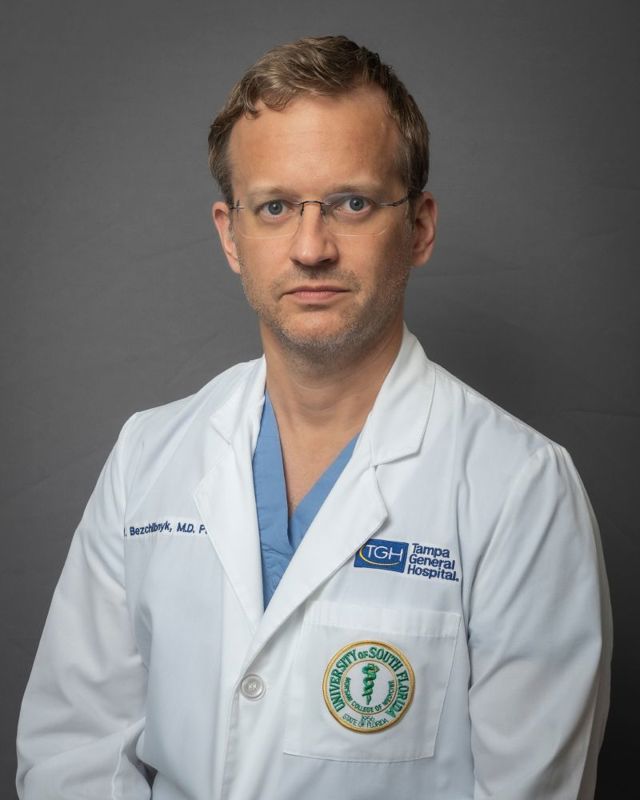 Yarema (Jeremy) Bezchlibnyk, MD, PhD, FRCSC
Associate Professor Program Head, Division of Stereotactic & Functional Neurosurgery Fellowship Director, Movement Disorders Neuromodulation Center
Yarema (Jeremy) Bezchlibnyk, MD, PhD, FRCSC
Associate Professor Program Head, Division of Stereotactic & Functional Neurosurgery Fellowship Director, Movement Disorders Neuromodulation Center -
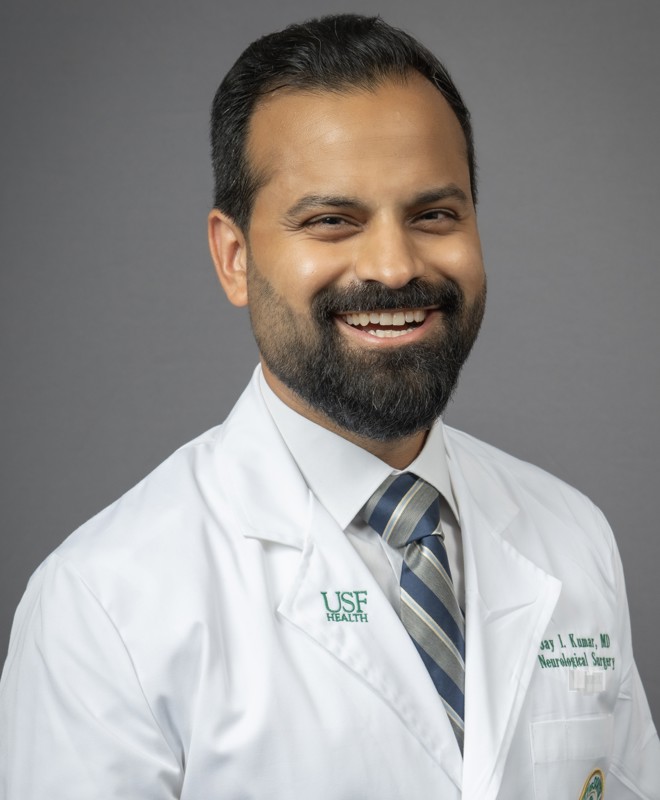 Jay Kumar, MD, MBA
Assistant Professor
Jay Kumar, MD, MBA
Assistant Professor
Training Sites
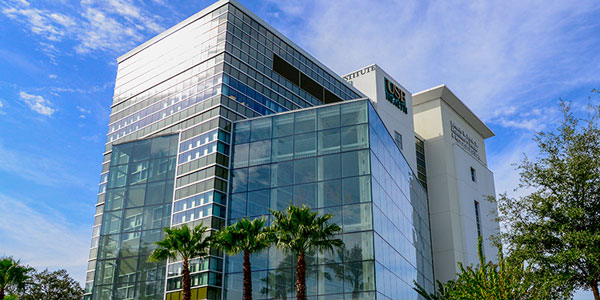
USF Health’s Neuroscience Institute
The Neuroscience Institut is a secondary site for fellowship training. It has active outpatient care, educational activities, and multi-disciplinary clinics including a multidisciplinary Movement Disorders Neuromodulation Clinic with integrated case-conferences. The neuromodulation clinic includes initial and follow-up neurostimulator programing, and fellow attendance is expected for one afternoon each week (Thursday). In addition, the University of South Florida is home to the Center for Aging and Brain Repair (CABR), a research institute focused on basic and transitional research addressing degenerative diseases such as Alzheimer’s, ALS, and Parkinson’s Disease and more acute conditions including spinal cord injury and stroke. This facility is available for fellows’ seeking exposure to basic science research.
Tampa General Hospital
Tampa General Hospital is the primary training site for this fellowship. TGH is a Level 1 trauma center serving a metropolitan statistical area of some 3 million people. This venue has inpatient services, outpatient services, dedicated neurosciences and trauma critical care units, an epilepsy monitoring unit, operating rooms including an intraoperative MRI, neuroimaging facilities, a neurorehabilitation unit, and clinical and basic research laboratories applicable to neuromodulation. This venue constitutes the sole site for surgical procedures and educational rounds, and most outpatient clinics and case conferences are conducted on-site as well.